Fire and Smoke Damage Restoration in Arizona
After a fire, soot and smoke keep doing damage long after the flames are out. Call and get connected with an independent local company that handles cleanup, odor removal and repair coordination.
Call now. We answer.
Tell the operator what happened and whether water is still running. You will be connected with an independent local company.
623.310.1555Phone line open 24 hours a day, every day
- Give your city and nearest cross streets
- Say what happened and if water is still running
- Ask the company about its license and insurance
Quick answer
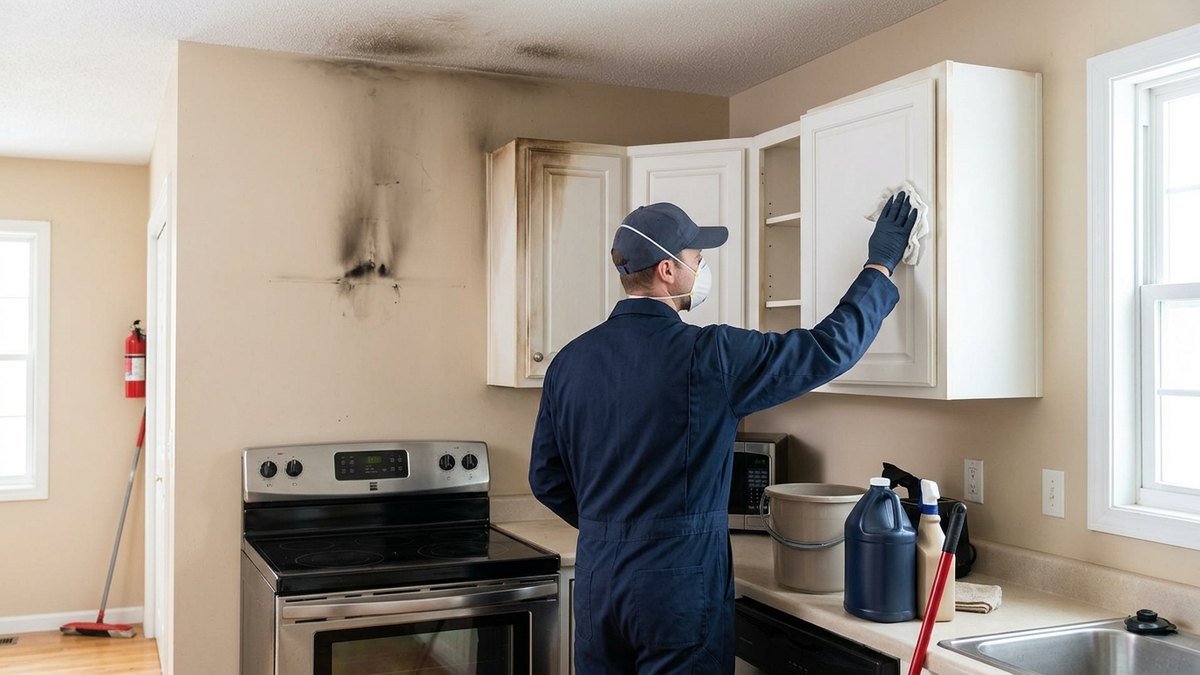
Fire damage restoration covers securing the building, removing soot and smoke residue, neutralizing odor, cleaning belongings and managing water damage from firefighting. Soot is acidic and can permanently stain and corrode surfaces if it is left in place, so cleanup should begin as soon as the fire department says it is safe to enter.
What fire damage restoration includes
- Board up and securing. Broken windows, damaged doors and open roof sections are covered so weather and trespassers stay out.
- Assessment. Technicians map fire, smoke, soot and water damage room by room, and note what is structural and what is cosmetic.
- Water removal. Firefighting leaves a lot of water behind. Extraction and drying are often needed in rooms the fire never touched.
- Soot and smoke cleaning. Walls, ceilings, floors and fixtures are cleaned with methods chosen for the type of soot and the surface.
- Odor control. Thermal fogging, hydroxyl generators and other treatments address smoke odor that has soaked into porous materials, insulation and ducts.
- Contents cleaning. Clothing, furniture, electronics, papers and keepsakes are sorted, cleaned or removed for off site cleaning, and an inventory is prepared for your claim.
- Air system cleaning. Ducts and HVAC components are cleaned so the system does not spread soot and odor through the house.
- Repairs. Once the structure is clean and dry, repairs and rebuilding are scheduled to match your insurer's approved scope.
Why soot should not wait
Soot is acidic. On metal it causes corrosion and on stone, tile and fabric it can leave permanent marks. Plastics and appliances can pit. Smoke odor settles into wood, drywall paper and insulation, and it can return in warm weather if the source is not removed. Cleaning promptly, using the right products for each surface, gives you the best chance of saving belongings and finishes.
Types of smoke and why they matter
| Type | Source | What it does |
|---|---|---|
| Dry smoke | Fast burning, high heat fires, such as paper or wood | Fine powdery soot that spreads widely and gets into small gaps |
| Wet smoke | Slow, smoldering fires, such as plastics and rubber | Sticky, smeary residue with a strong odor that is hard to clean |
| Protein residue | Kitchen fires that burned food | Nearly invisible film that discolors paint and leaves a persistent smell |
| Fuel oil soot | Furnace puff backs | Heavy, oily residue that spreads through the whole house |
What to do after a fire
- Wait for the fire department to say the building is safe before you go back in.
- Contact your insurance company and ask what your policy covers for temporary housing and living expenses.
- Take photos and video of the damage before anything is moved.
- Do not use the HVAC system, because it will spread soot into clean rooms.
- Do not wash walls or try to clean electronics yourself. Wiping soot the wrong way can grind it into surfaces.
- Call for help so the structure can be secured and cleaning can begin.
Insurance and living expenses
Many homeowner policies include coverage for additional living expenses while your home is unlivable. Keep receipts for hotels, meals above your normal costs and other related expenses. Your restoration provider can supply photos, inventories and scope documents to support your claim, but your insurer makes the decision on coverage.
Where this service is available
We connect callers with independent companies in 58 Arizona cities for fire and smoke damage. Popular areas include:
See all 58 cities
- Ajo
- Apache Junction
- Arivaca
- Arizona City
- Avondale
- Buckeye
- Carefree
- Casa Grande
- Cave Creek
- Chandler
- Coolidge
- El Mirage
- Eloy
- Flagstaff
- Florence
- Forest Lakes
- Fountain Hills
- Gila Bend
- Gilbert
- Glendale
- Gold Canyon
- Goodyear
- Green Valley
- Higley
- Kearny
- Laveen
- Litchfield Park
- Luke Air Force Base
- Mammoth
- Marana
- Maricopa
- Mesa
- Munds Park
- New River
- Oracle
- Page
- Paradise Valley
- Peoria
- Phoenix
- Queen Creek
- Rillito
- Rio Verde
- Sahuarita
- San Manuel
- San Tan Valley
- Scottsdale
- Sun City
- Sun City West
- Superior
- Surprise
- Tempe
- Tolleson
- Tucson
- Vail
- Wickenburg
- Williams
- Winkelman
- Youngtown
Frequently asked questions
Can smoke damage be removed completely?
Often yes, but it depends on how long the residue sat, what burned and what materials absorbed it. Hard surfaces clean up well. Porous materials such as insulation, carpet pad and some fabrics may need to be replaced.
How long does fire damage cleanup take?
Emergency work and cleaning usually take days to a couple of weeks. Rebuilding can take weeks or months depending on the extent of structural damage, permits and material availability.
Do I need to leave my home after a fire?
If there is structural damage, no power or heavy smoke and soot, plan to stay elsewhere until the property is safe. Ask your insurer about additional living expense coverage.
What about a small kitchen fire?
Even a small fire can leave grease and protein residue and odor that spread through the home and ducts. A cleanup assessment is worth it if you still smell smoke after airing out.
Water is spreading right now? Do not wait.
Every hour of standing water pushes moisture further into the structure. Call now and get connected.