Quick answer
Close the main water valve first, then open a faucet at the lowest point of the house to drain what is left. Stay away from electrical hazards, take photos and call a restoration company. A burst pipe can release hundreds of gallons an hour, so every minute counts.
Step one: shut off the water
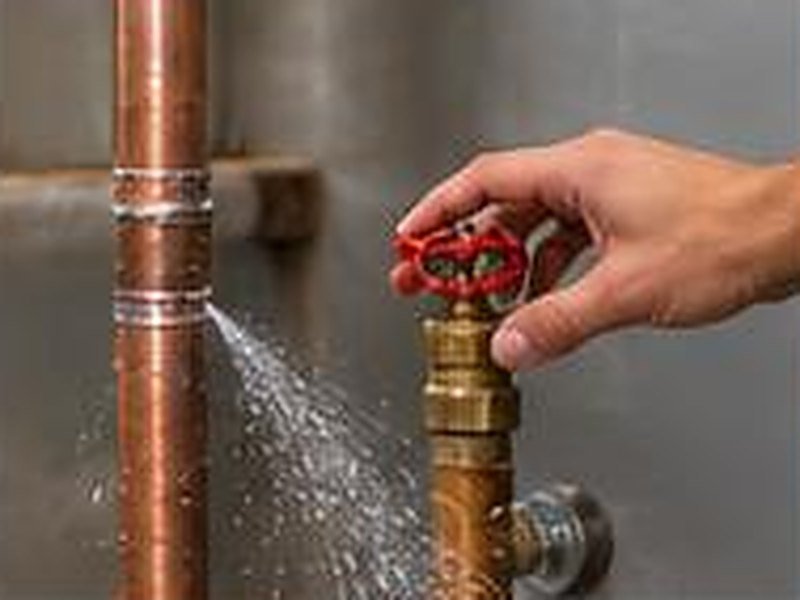
Go straight to the main water valve and turn it off. It is usually a round wheel handle or a lever. Turn a wheel clockwise until it stops. A lever valve is closed when the handle sits crosswise to the pipe. If you cannot find the valve, the city meter box at the street has a shutoff, but it often needs a special key.
Step two: drain the system
After the main is off, open the faucet at the lowest point of the house to let the remaining water drain. Flush toilets once to empty the tanks. If your water heater has a supply line that is leaking, also turn off the power or gas to the heater.
Step three: handle electricity carefully
Water and electricity are a bad mix. If the flooded area contains outlets, appliances or a panel, do not walk through it. If the main breaker panel is in a dry location, turning the power off to the affected area is a good idea. If you are not sure, call a licensed electrician.
Step four: document and call for help
Take video and photos of the pipe, the water and every damaged room. Then call a restoration company. A crew will extract the water and use moisture meters and thermal cameras to find water in walls and under floors. A plumber will repair the pipe. You can start drying before the pipe is permanently fixed as long as the main is off.
Why pipes fail in Arizona
- Aging plumbing. Galvanized and old copper pipes corrode from the inside. Early polybutylene and some plastic fittings from past decades are known to fail.
- Hard water. Mineral buildup narrows pipes, wears fittings and shortens the life of valves, hoses and water heaters.
- High water pressure. Strong pressure stresses fittings. A pressure regulator is cheap protection.
- Slab leaks. Pipes in or under concrete can pinhole over years.
- Freezing. In the mountains and occasionally even in the valleys, frozen pipes split when they freeze and then flood when they thaw. See our guide to frozen pipes.
After the repair
- Ask the plumber what caused the failure and whether other lines are at risk.
- Have the pressure checked. Many plumbers suggest keeping household pressure below about 80 psi.
- Install water leak sensors near water heaters, under sinks and by the washing machine. A smart shutoff valve can close the main automatically.
- Keep copies of the plumber's invoice. Your insurer may ask for it.
Frequently asked questions
How much water can a burst pipe release?
A full supply line can release hundreds of gallons in an hour at normal household pressure. That is why the first step is always the main valve.
Is a burst pipe covered by homeowners insurance?
Sudden and accidental pipe bursts are commonly covered, but the cost of fixing the pipe itself may be treated differently from the resulting damage. Check your policy and call your insurer.
Do I need to tear out the walls?
Not always. Moisture mapping shows where water went. Drywall that stays wet usually has to come out, but some wall materials can be dried in place.