Quick answer
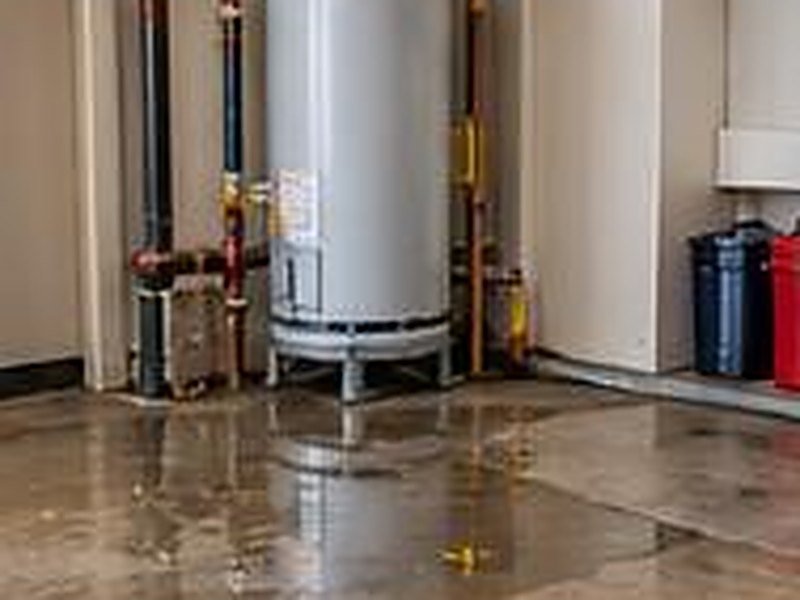
Turn off the power or gas to the water heater, close the cold water supply valve on top of the tank, and drain what you can. Keep out of standing water near electrical equipment and call for water extraction. Tanks that are ten years old or more are the most likely to fail.
What to do first
- Turn off power or gas. For an electric heater, switch off its breaker. For a gas heater, turn the gas control to off or pilot. Only do this if you can reach the controls without standing in water.
- Close the cold water inlet. The valve is on the cold pipe that enters the top of the tank. Turn it clockwise or crosswise to the pipe.
- Relieve the water. Connect a garden hose to the drain valve at the bottom if you can, and run it outside. Open a hot water tap in the house to let air in.
- Take photos and video of the heater, the water and the damage.
- Call for water extraction. Water heaters in Arizona are often in garages and utility closets right next to finished rooms, so water gets into drywall and flooring quickly.
Why water heaters fail
- Age. Tank heaters commonly last somewhere between eight and twelve years, and Arizona's hard water and heat tend to shorten that.
- Sediment. Minerals settle at the bottom, heat unevenly and corrode the tank. Flushing the tank can help.
- A worn anode rod. This rod protects the tank from rust. When it is used up, the tank corrodes.
- Pressure. Too much pressure or a failed temperature and pressure relief valve can cause leaks.
- Loose or corroded fittings. Supply connections wear out and drip.
Signs it is time to replace it
- Rust colored water from the hot tap
- Rumbling or popping from the tank
- Moisture or rust around the base or connections
- A tank that is ten years old or older and has never been serviced
Reduce the risk of damage
- Install a drain pan with a drain line to the outside under the heater.
- Put a leak sensor on the floor near the tank.
- Know where the cold water shutoff is.
- Replace aging tanks before they fail.
- Consider a tankless heater, which does not hold a large volume of water.
Insurance
A sudden tank rupture is the kind of event that policies often cover for the resulting water damage. The cost of replacing the heater itself is typically not covered. Ask your insurer how they treat both parts.
Frequently asked questions
Is a water heater leak an emergency?
Yes. Even a slow leak can ruin flooring and drywall and create mold. A full tank can hold 40 to 50 gallons or more and release it in minutes.
Should I replace the heater or repair it?
If the tank itself is leaking, it cannot be repaired and must be replaced. A leaking valve or fitting may be repairable. A plumber can tell you which it is.