Mold Remediation in Arizona
Mold needs moisture to grow, so lasting results come from finding the water source and drying the structure, then removing the growth. Call and get connected with an independent local company.
Call now. We answer.
Tell the operator what happened and whether water is still running. You will be connected with an independent local company.
623.310.1555Phone line open 24 hours a day, every day
- Give your city and nearest cross streets
- Say what happened and if water is still running
- Ask the company about its license and insurance
Quick answer
Mold remediation is the process of containing, removing and cleaning mold growth and fixing the moisture problem behind it. Industry practice follows the ANSI and IICRC S520 standard. The EPA notes that mold can begin to grow on wet materials within 24 to 48 hours and that moisture control is the key to preventing it.
What mold remediation includes
- Finding the moisture source. Mold does not return when the leak, condensation or humidity problem has been corrected. If that step is skipped, growth comes back.
- Assessment and sampling when needed. A visual inspection and moisture readings guide the plan. Air or surface sampling can help in some situations, and results are only useful if they are compared with outdoor air and interpreted by a qualified person.
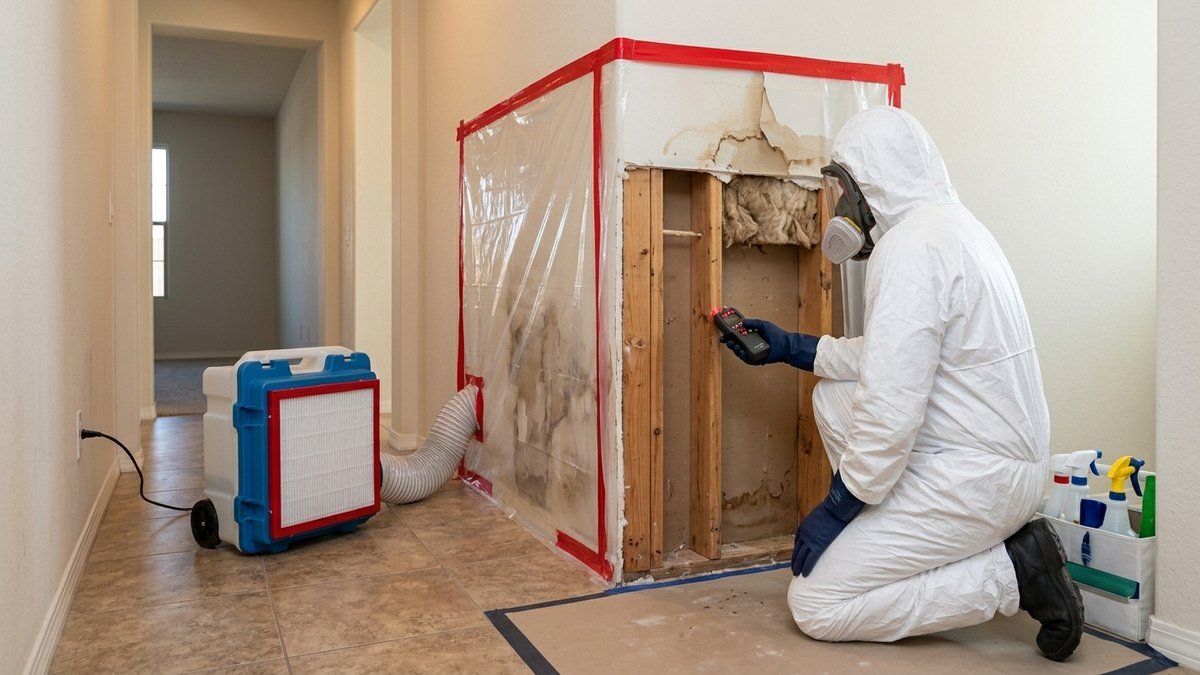
- Containment. Plastic sheeting and negative air pressure keep spores from spreading to clean rooms while work is underway.
- Removal. Porous materials with mold growth, such as drywall, insulation and carpet, are bagged and removed. Semi porous and hard materials are cleaned with HEPA vacuums and damp wiping.
- Air filtration. HEPA air scrubbers run during and after the work to capture airborne particles.
- Drying. Affected structure is dried to normal moisture levels before anything is rebuilt.
- Verification. A visual check and, when requested, post remediation testing confirm the area is clean before repairs begin.
Signs you may have a mold problem
- A musty or earthy odor that does not go away, especially in a closet, bathroom or room that had a leak
- Visible fuzzy or spotted growth in black, green, white, gray or orange on walls, ceilings, grout or trim
- Paint or wallpaper that is bubbling, peeling or stained
- Warped baseboards, soft drywall or a ceiling stain that keeps coming back
- Allergy like symptoms that ease when you leave the house, such as sneezing, congestion or irritated eyes
- A recent water leak, roof leak or AC drain overflow that was not dried by a professional
Mold in a dry climate
Many Arizona residents assume mold is a problem for humid states. It is not that simple. A modern home is sealed and air conditioned, so water that gets inside a wall, under flooring or into an attic stays there. Plumbing leaks, AC drain overflows, roof leaks during monsoon season and slab leaks all give mold what it needs. Bathrooms and kitchens are common spots, and so are water heater closets and the area around evaporative coolers.
How big is too big to handle yourself?
The EPA suggests that a small area of mold, roughly ten square feet or less, can often be cleaned by a homeowner with proper protection, as long as the moisture problem is fixed. Larger areas, growth inside walls or HVAC systems, mold after contaminated water or sewage, and any situation where someone in the home has serious respiratory problems or a weakened immune system call for professional help.
Testing and what it can and cannot tell you
Testing can document that mold spores are elevated indoors compared to outside, and it can identify types of mold. It cannot tell you exactly how a person will react, and there are no federal limits for acceptable mold levels in homes. A good plan starts with finding visible growth and moisture. Testing is most useful when mold is suspected but not visible, when the scope is in dispute or when you want clearance documentation after remediation.
Insurance
Coverage for mold varies widely. Many policies cover mold only when it results from a covered water loss and may limit the dollar amount. Read your policy, ask your insurer and document everything.
Where this service is available
We connect callers with independent companies in 31 Arizona cities for mold. Popular areas include:
See all 31 cities
Frequently asked questions
How much does mold remediation cost in Arizona?
Cost depends on how much area is affected, whether growth is inside walls or air systems, how much material must be removed and whether containment is needed. Companies set their own pricing, and you should get the scope and price in writing before work begins.
Is black mold more dangerous than other mold?
Color alone does not tell you the type of mold or how risky it is. The right response is the same for any indoor mold growth: fix the moisture and have it removed properly, especially if anyone in the home has asthma, allergies or a weakened immune system.
Will bleach kill mold?
Bleach can discolor surface mold on hard materials but does not penetrate porous materials, so growth often returns. Most professionals avoid bleach for remediation. Removing the growth and drying the area matters most.
How long does mold remediation take?
Small jobs can take a day or two. Larger jobs with containment, removal and drying take several days to a week or more, followed by repairs.
Water is spreading right now? Do not wait.
Every hour of standing water pushes moisture further into the structure. Call now and get connected.