Water Damage Restoration in Arizona
Burst pipe, failed water heater, roof leak or monsoon flood. Call and get connected with an independent local restoration company for extraction, drying and cleanup.
Call now. We answer.
Tell the operator what happened and whether water is still running. You will be connected with an independent local company.
623.310.1555Phone line open 24 hours a day, every day
- Give your city and nearest cross streets
- Say what happened and if water is still running
- Ask the company about its license and insurance
Quick answer
Water damage restoration is the process of removing standing water, drying the structure and contents, cleaning and sanitizing affected areas and removing materials that cannot be saved. In Arizona, drying starts as soon as possible because mold can begin to grow on wet materials within 24 to 48 hours.
What water damage restoration includes
A proper job is more than a few fans and a shop vacuum. Reputable restoration companies follow industry standards, most commonly the ANSI and IICRC S500 standard for professional water damage restoration. The work generally moves through the same stages.
- Safety and source control. Confirm the water is stopped, check for electrical hazards and identify what category of water you are dealing with.
- Extraction. Pumps and extractors remove standing water from floors, and wet carpet and padding are lifted or removed when they cannot be dried in place.
- Moisture mapping. Technicians use moisture meters and thermal cameras to find water inside walls, under floors and above ceilings, where you cannot see it.
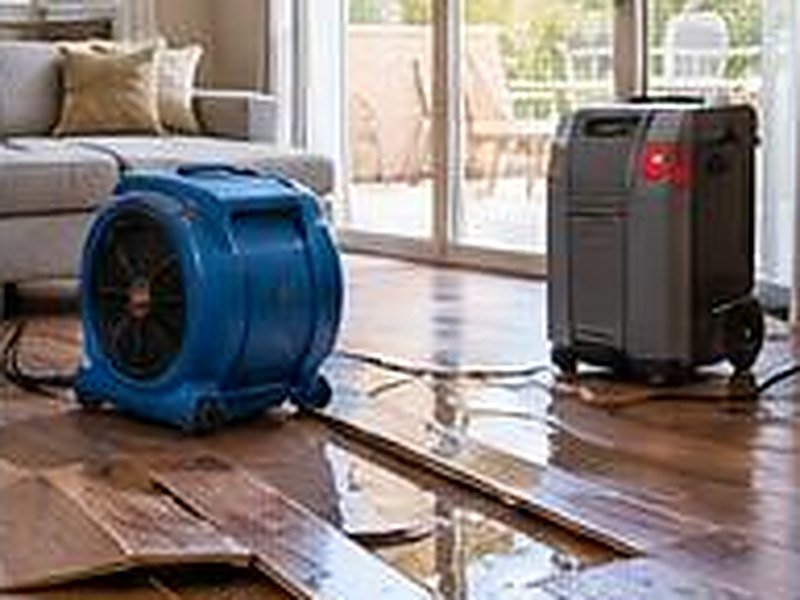
- Structural drying. Air movers and dehumidifiers are placed to match the size of the affected area and the class of the loss, and readings are checked daily until materials reach their drying goals.
- Cleaning and sanitizing. Surfaces and contents are cleaned, and antimicrobial treatment is applied where it is appropriate.
- Removal of unsalvageable materials. Wet insulation, soaked drywall and contaminated porous materials are taken out so they do not become a mold source.
- Documentation. Photos, moisture logs and equipment records support an insurance claim and prove the structure was dried.
The three categories of water
The category describes how contaminated the water is at the source, and it changes how the job has to be done.
| Category | What it means | Common examples |
|---|---|---|
| Category 1 | Clean water from a sanitary source. Becomes more contaminated the longer it sits. | Broken supply line, faucet left on, water heater leak, rainwater through a roof |
| Category 2 | Gray water with chemical or biological contamination that can cause illness. | Dishwasher or washing machine overflow, toilet overflow with urine only |
| Category 3 | Grossly contaminated water that can carry serious pathogens. | Sewage backup, flood water from outside, standing water that has grown bacteria |
Category 1 water left sitting can slide into Category 2 and then Category 3. That is one more reason time matters. Sewage and flood water are handled as biohazard work. See our biohazard and sewage cleanup page.
What happens in the first 72 hours
| Time | What is going on |
|---|---|
| First hour | Water spreads across hard floors and wicks up into baseboards, cabinets and drywall. Shutting off the source and starting extraction limits how far it goes. |
| Within 24 hours | Drywall softens, wood swells and carpet padding soaks through. Furniture finishes stain. Mold can begin on damp materials. |
| 24 to 48 hours | Mold growth can start on wet surfaces, odors develop and some materials that were salvageable early can no longer be saved. |
| 72 hours and beyond | Hidden moisture in wall cavities and subfloors keeps feeding mold. Costs and repair scope typically grow the longer drying is delayed. |
A typical structural drying job runs about three to five days with commercial equipment, although larger or deeper losses take longer. Your provider checks moisture readings each visit and removes equipment only when the materials are dry.
Common causes of water damage in Arizona
- Supply lines and fixtures. Braided hoses under sinks, toilet fill lines, ice maker lines and washing machine hoses fail without much warning.
- Water heaters. Tanks corrode from the inside, and a failed tank can release dozens of gallons quickly. Many Arizona water heaters are in garages and closets next to finished rooms.
- Air conditioning. Clogged condensate drains and cracked drain pans overflow into ceilings, walls and attic space.
- Slab leaks. Pinhole leaks in pipes under a concrete slab can run for weeks before they show up as a damp spot or an unusual water bill.
- Roof leaks and monsoon storms. Wind driven rain exploits aging flashing, tile underlayment and flat roof seams, and flash floods push water through garage doors and low entries.
- Freezing weather. In northern and higher elevation communities, frozen pipes split and then flood a house when they thaw.
- Sewer and drain backups. Roots, collapsed lines and clogs push contaminated water back into tubs, floor drains and toilets.
Do this while you wait for help
- Stop the source. Close the main water valve, or the shutoff at the fixture or appliance.
- Turn off power only if the electrical panel is dry and you can reach it without standing in water.
- Keep people and pets out of wet rooms, and stay out of sewage entirely.
- Take a continuous walkthrough video, then close up photos of the source and the damage, before you move anything.
- Lift small furniture, electronics, papers and keepsakes to dry surfaces. Take up rugs.
- Do not run a household vacuum on standing water, and do not use ceiling fixtures under a wet ceiling.
- Do not ignore a small leak just because the water seems to have stopped. Wet materials keep spreading moisture.
How to choose a restoration company
You are allowed to pick your own provider, and you should check the basics before work starts.
- Look up the company on the Arizona Registrar of Contractors website at roc.az.gov and confirm that the license is active and the classification fits the work.
- Ask for proof of liability insurance and, if crews will be on site, workers compensation coverage.
- Ask whether the technicians hold IICRC certifications such as Water Damage Restoration Technician or Applied Structural Drying.
- Ask them to explain how they will document moisture readings and drying progress.
- Get the scope of work and pricing method in writing before anything is torn out.
- Be cautious about anyone who pressures you to sign a contract on the spot or asks you to sign over insurance payments before work begins.
Where this service is available
We connect callers with independent companies in 138 Arizona cities for water damage. Popular areas include:
See all 138 cities
- Ajo
- Alpine
- Amado
- Apache Junction
- Arivaca
- Arizona City
- Ash Fork
- Avondale
- Benson
- Bisbee
- Black Canyon City
- Buckeye
- Bullhead City
- Camp Verde
- Carefree
- Casa Grande
- Cave Creek
- Central
- Chandler
- Chino Valley
- Clarkdale
- Claypool
- Clifton
- Congress
- Coolidge
- Cottonwood
- Dewey
- Douglas
- Duncan
- Eagar
- Ehrenberg
- El Mirage
- Elgin
- Eloy
- Flagstaff
- Florence
- Forest Lakes
- Fort Huachuca
- Fort Mohave
- Fort Thomas
- Fountain Hills
- Gila Bend
- Gilbert
- Glendale
- Globe
- Gold Canyon
- Golden Valley
- Goodyear
- Green Valley
- Greer
- Hayden
- Heber
- Hereford
- Higley
- Holbrook
- Huachuca City
- Jerome
- Kearny
- Kingman
- Lake Havasu City
- Lakeside
- Laveen
- Litchfield Park
- Luke Air Force Base
- Mammoth
- Marana
- Maricopa
- Mayer
- Mesa
- Miami
- Mohave Valley
- Morenci
- Munds Park
- Naco
- New River
- Nogales
- Oracle
- Overgaard
- Page
- Paradise Valley
- Parker
- Patagonia
- Payson
- Peoria
- Phoenix
- Pima
- Pine
- Pinetop
- Pirtleville
- Prescott
- Prescott Valley
- Quartzsite
- Queen Creek
- Rillito
- Rio Rico
- Rio Verde
- Safford
- Sahuarita
- Saint David
- Saint Johns
- Salome
- San Luis
- San Manuel
- San Tan Valley
- Scottsdale
- Sedona
- Show Low
- Sierra Vista
- Snowflake
- Somerton
- Sonoita
- Springerville
- Sun City
- Sun City West
- Superior
- Surprise
- Taylor
- Tempe
- Thatcher
- Tolleson
- Tombstone
- Tonto Basin
- Topock
- Tubac
- Tucson
- Tumacacori
- Vail
- Wellton
- White Mountain Lake
- Wickenburg
- Willcox
- Williams
- Winkelman
- Winslow
- Woodruff
- Yarnell
- Youngtown
- Yuma
Frequently asked questions
How long does water damage restoration take in Arizona?
Drying usually takes about three to five days for a typical loss, with daily moisture checks. If drywall, flooring or cabinets must be replaced, repair work comes after that and can add days or weeks depending on the scope.
Can I dry out water damage myself?
Small, clean spills on hard floors can be handled by a homeowner. Anything involving wet walls, carpet pad, ceilings, insulation or more than a small area is hard to dry properly without commercial equipment and moisture meters. Hidden moisture is the usual cause of mold complaints afterward.
Will my homeowners insurance pay for water damage?
Standard policies commonly cover sudden and accidental discharge, such as a burst pipe. Flood from outside water is usually excluded and needs separate flood insurance. Slow leaks and neglected maintenance are often excluded too. Check your policy and talk with your insurer.
Should I pull up wet carpet?
Carpet and pad that are soaked with clean water can sometimes be dried, but pad is often removed. If the water was contaminated, carpet and pad generally need to be discarded. Let the restoration company make the call after testing.
What if the water came from a neighbor's unit?
Document the damage, tell your landlord, property manager or HOA and your insurer, and call for mitigation right away. Who pays depends on the cause and your policies, which is a separate conversation from getting the structure dry.
Water is spreading right now? Do not wait.
Every hour of standing water pushes moisture further into the structure. Call now and get connected.