Quick answer
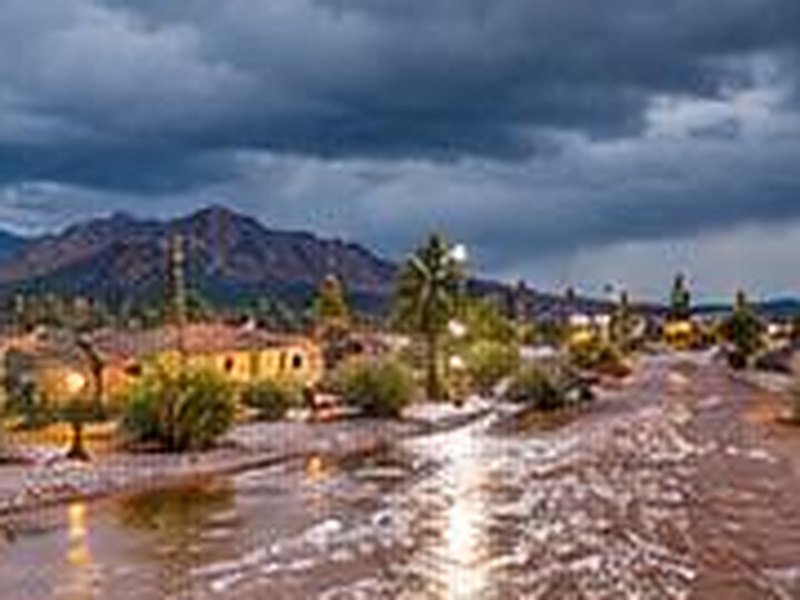
Arizona's monsoon season officially runs from June 15 to September 30. Storms can bring flash floods, dust storms and wind driven rain with little warning. Prepare roofs, drains and doors before June, and after a storm remove water quickly and treat outside flood water as contaminated.
The monsoon in plain terms
Each summer, moist air moves into Arizona and builds thunderstorms over the mountains and desert. The National Weather Service defines the monsoon season as June 15 through September 30. Storms are often local and brief, but they can drop a lot of rain in a short time and cause flash flooding in washes, streets and low lots. Wind from storms can lift dust into a wall of dirt that drops visibility to near zero.
How monsoon storms damage homes
- Roof leaks. Heavy rain driven sideways by wind finds weak flashing, worn underlayment, cracked tiles and skylight seals.
- Clogged drains. Dust and debris from dust storms plug scuppers and roof drains, so water ponds on flat roofs and finds its way in.
- Flash flooding. Water pushes under garage doors and through low entries.
- Window and door leaks. Worn weatherstripping and sealant fail under driving rain.
- Lightning and power outages. These can lead to fires and to sump or sewer system failures.
Before the season: a checklist
- Have a roofer check flashing, vents, tiles and flat roof seams
- Clean gutters, scuppers and roof drains
- Check weatherstripping on doors and the garage door bottom seal
- Re caulk exterior windows and penetrations where the sealant has cracked
- Make sure the ground slopes away from the house, and clear nearby drainage channels
- Keep sandbags or flood barriers on hand if you live near a wash. Many cities offer sandbags during storm season, so check your city's website
- Take photos of your home and belongings for insurance
- Check your policy for flood coverage. Standard homeowners insurance usually does not cover flood
During a storm
- Stay out of washes and low areas. Never drive into a flooded road. Arizona's "Stupid Motorist Law" can make drivers pay for their own rescue if they drive around barricades into flooded roads.
- If a dust storm catches you on the road, the Arizona Department of Transportation advises you to pull off the road as far as possible, turn off your lights, take your foot off the brake and stay buckled in until the storm passes.
- Stay away from windows and unplug sensitive electronics.
After a storm: what to do
- Stay out of standing water until you know power is off to the area.
- Take photos and video of the water level and the damage.
- Remove standing water quickly. Call for extraction if there is more than a small amount.
- Treat flood water that came from outside as contaminated. It can carry sewage, soil and chemicals. Wear protective gear and do not eat food that touched it.
- Call your insurer and, if you have it, your flood insurance carrier.
- Dry the structure. The EPA notes that mold can begin to grow within 24 to 48 hours of getting wet.
Flood insurance
Standard homeowners policies typically exclude flood, which is water that rises from outside. Flood coverage is sold separately through the National Flood Insurance Program and some private insurers. NFIP policies generally have a 30 day waiting period before coverage starts, so buying flood insurance after a storm is too late for that storm. You can learn more at FloodSmart.gov.
Frequently asked questions
When is monsoon season in Arizona?
The National Weather Service defines it as June 15 through September 30, though storms can appear outside those dates.
Does homeowners insurance cover monsoon damage?
Wind driven rain through a roof opening created by wind or hail is often covered. Rising flood water is not. Details depend on your policy, so ask your insurer.
Is flood water safe to clean up myself?
Flood water from outside is Category 3. It carries contaminants, and porous materials that touched it usually have to be removed. Professional cleanup is the safer choice.