Quick answer
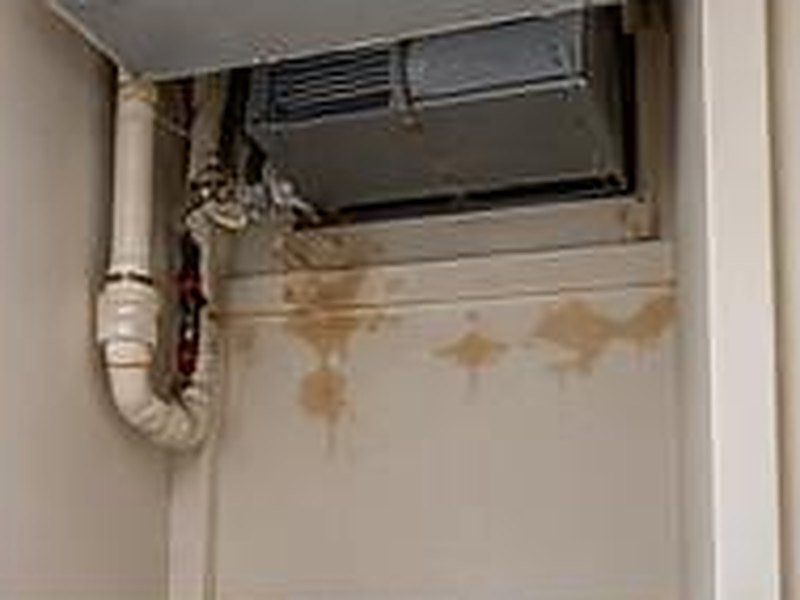
Air conditioners remove moisture from the air and send it out through a condensate drain line. When that line clogs or the drain pan cracks, water overflows into ceilings, walls and closets. Turn off the AC at the thermostat, stop the water and have the line cleared.
Why AC units leak
As cooled air passes over the evaporator coil, moisture condenses and drips into a pan. A drain line carries it outside or to a drain. In Arizona, systems run for much of the year, so the line sees a lot of water. Algae, dust and debris build up and block it. The water then backs up and spills.
Common causes
- A clogged condensate drain line
- A cracked or rusted drain pan
- A dirty air filter that lets the coil freeze and then thaw into a lot of water
- Low refrigerant, which can also cause icing
- An air handler installed in an attic or closet without a safety switch or secondary pan
- Poor insulation on ducts, leading to condensation
What to look for
- Water stains on the ceiling below an attic air handler or near a wall unit
- Water in the drain pan or on the floor near the air handler
- A musty smell near vents
- The system shutting off by itself, which can mean a float switch tripped
- Ice on the refrigerant lines or coil
What to do when it leaks
- Switch the system off at the thermostat and at the breaker so it stops making more water.
- Soak up standing water and place a bucket under drips.
- Take photos of the damage.
- Call an HVAC technician to clear the drain, check the pan and test the float switch.
- If the ceiling, insulation or drywall is wet, call a restoration company. Wet insulation and drywall in an attic can grow mold quickly, and hidden damage is common.
Preventing it
- Schedule yearly maintenance before summer.
- Change filters on schedule.
- Ask the technician to install a float switch and a secondary drain pan if there is not one.
- Know where the drain terminates outside, and check that water drips there when the system runs.
Frequently asked questions
Is AC water damage covered by insurance?
Sudden overflow damage is often covered, while gradual leaks and lack of maintenance often are not. Coverage depends on the policy.
Can I clear the drain line myself?
Some homeowners flush the line using a wet and dry vacuum or a cleaning product recommended by the manufacturer. If you are not comfortable working on the system, call a technician.