Quick answer
Sewage backup is category 3 water that can carry bacteria, viruses and parasites. Stay out, keep children and pets away, stop using water, and call professionals who can remove contaminated materials, clean and disinfect properly.
What sewage backup is
A sewage backup happens when wastewater flows back through a toilet, tub, floor drain or sink instead of out to the sewer. Causes include clogs in the main line, tree roots, broken pipes, collapsed lines and city sewer problems. It is called category 3 water, the most contaminated type.
Health risks
Sewage can contain bacteria such as E. coli and salmonella, viruses and parasites. Skin contact, splashes and airborne droplets can cause stomach illness, skin infections and respiratory irritation. Children, older adults, pregnant people and anyone with a weak immune system face more risk. If anyone in your home feels sick after exposure, contact a doctor.
What to do first
- Stop using sinks, tubs, toilets, washing machines and dishwashers. Every flush adds more.
- Keep people and pets out of the affected rooms.
- Turn off power to the area only if it is safe and the panel is dry.
- Open windows for fresh air if possible.
- Take photos of the water and damaged items.
- Call a plumber to clear the line and call (623) 310-1555 for cleanup.
Why you should not clean it yourself
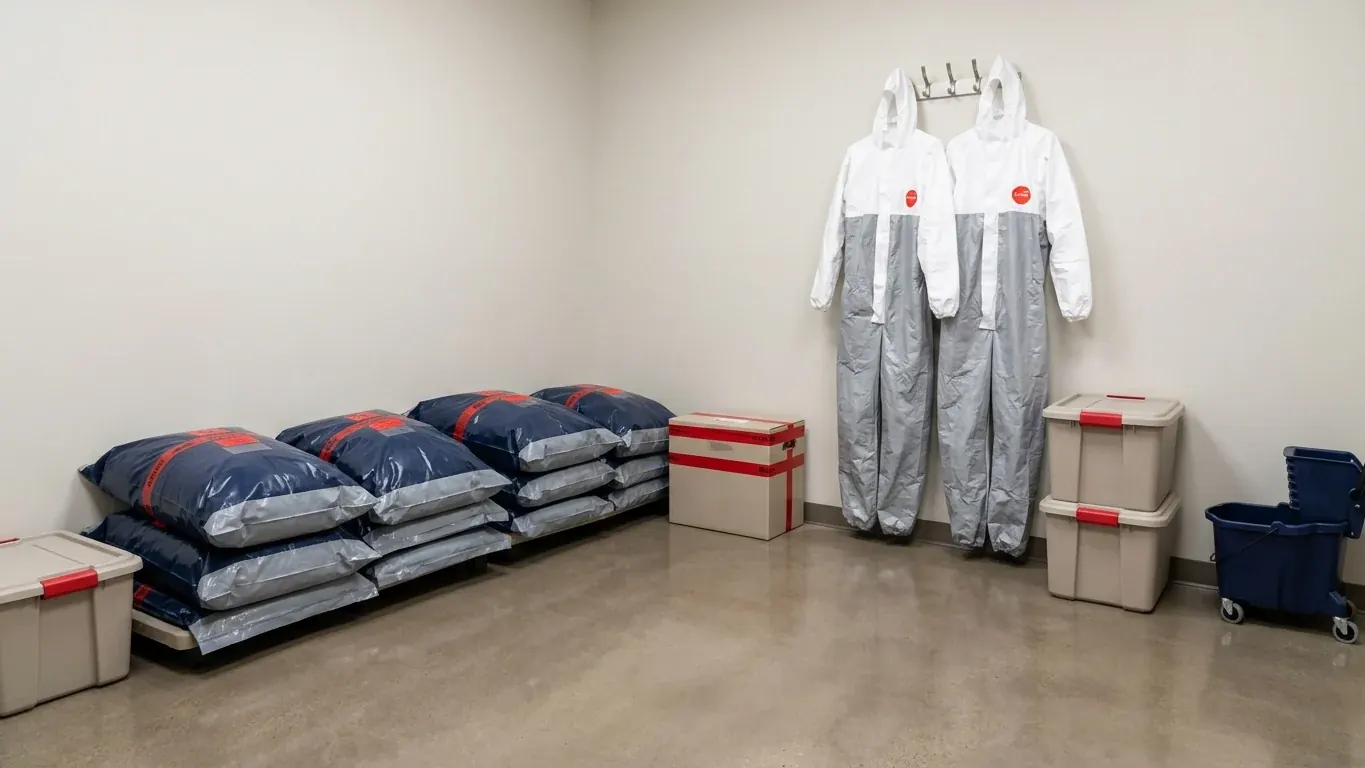
A mop and bleach will not make sewage safe. Porous materials like carpet, padding, drywall and insulation absorb contamination and usually cannot be cleaned, so they need to be removed. Professionals wear protective gear, use pumps, extractors, HEPA equipment and approved disinfectants, and follow containment steps to avoid spreading contamination to clean areas.
How cleanup works
- The crew sets up protective barriers and gear.
- Standing water is pumped out.
- Contaminated carpet, pad, drywall and insulation are removed in sealed bags.
- Hard surfaces are washed and disinfected.
- The structure is dried with air movers and dehumidifiers.
- Moisture and odor are checked, and repairs begin after drying is confirmed.
Our sewage backup cleanup page has more detail, and the biohazard cleanup page covers related situations.
What can be saved
Hard goods such as glass, metal and sealed tile can often be cleaned and disinfected. Soft goods such as mattresses, upholstered furniture and rugs are usually thrown out. Papers and photos that were wet with sewage generally cannot be saved. Photograph before you discard anything.
Prevention
- Do not flush wipes, grease or hygiene products.
- Have the main line checked or scoped if you have slow drains or older pipes.
- Keep trees and big roots away from sewer lines.
- Install a backwater valve if your plumber recommends it.
Insurance
Many policies exclude sewer backup unless you added a specific endorsement. Check your policy and ask your agent. If the backup came from the city line, tell the city as well.
More guides to read next
Get help in your city
Pick your city for local conditions, ZIP codes and the 24/7 line at (623) 310-1555.
How this changes across Arizona
Low desert
In the low desert around Phoenix, Tucson and Yuma, the usual water problems are cooling system condensate, failing supply lines and water heaters, slab leaks and monsoon roof leaks. Heat helps materials dry but also speeds odor and mold, so slow action still costs you.
High country
At higher elevation around Flagstaff, Prescott and the White Mountains, winter freezes, ice dams and spring snow melt drive most water damage. Pipes in exterior walls and unheated spaces are the usual weak points.
Colorado River
Western Arizona summers are some of the hottest in the country. Air conditioner failures and condensate overflows are common causes of water damage, and empty properties benefit from a monthly check.
Keep these records
- The date and time you first noticed the problem, and what you did.
- Photos and video of the damage before and after any cleanup.
- The name, license number and insurance proof of every company.
- Moisture readings and drying logs, if the company provides them.
- A written scope and every invoice, receipt and message.
- Your insurance claim number and the adjuster's contact details.
When to call
If water is spreading, a pipe has burst, or you are unsure how far the damage goes, call (623) 310-1555 any hour for emergency contact and urgent services. For storms, check weather.gov and the storm, hail and flood alerts guide, and see the FEMA app guide to set up alerts. To find your ZIP code, use the ZIP code lookup. To compare prices, read the cost guide.
More quick answers
How fast should I call after water damage?
As soon as you can safely do so. Water moves into drywall, insulation and flooring within hours, and mold can start in a day or two in damp materials. Call (623) 310-1555 at any hour.
Does this help line charge me to call?
Calling to describe the damage and get connected does not obligate you to hire anyone. You decide whether to use the company you are connected with.
What should I photograph before cleanup starts?
Take wide and close photos of the water, the source, damaged belongings and any visible staining, with the date. Keep receipts. This record helps with insurance.
Do I need to be home when the crew arrives?
Someone with access to the property should be there to show the damage and sign the work authorization. Ask the company how it handles access and keys.
Can I use my own plumber first?
Yes. Stopping the leak is the first step, and a plumber can do that. A restoration company then dries and cleans what the water reached.
Frequently asked questions
Is sewage water dangerous?
Yes. It can contain bacteria, viruses and parasites, so avoid contact.
Can I clean sewage backup with bleach?
Bleach alone is not enough. Porous materials need removal and professional cleaning.
How long does cleanup take?
Many jobs take a few days for removal and drying, plus time for repairs.
Is sewer backup covered by insurance?
Often only with a separate endorsement. Check your policy.
Can I stay in the house?
Often not in the affected area. Ask the cleanup crew and your doctor if anyone is vulnerable.
Sources and further reading
- National Weather Service: Flood Safety
- Ready.gov: Floods
- FEMA: Emergency alerts and preparedness
- Arizona Registrar of Contractors: license lookup