Water Mitigation Services in Arizona
Mitigation is the first phase after water gets in: stop the source, remove the water and start drying before damage spreads. Call for water damage mitigation anywhere in Arizona.
Call now. We answer.
Tell the operator what happened and whether water is still running. Help is one call away.
(623) 310-1555Phone line open 24 hours a day, every day
- Give your city and nearest cross streets
- Say what happened and if water is still running
- Ask the company about its license and insurance
Quick answer
Water mitigation is the emergency work done right after a leak or flood to stop further damage. It includes stopping the water, extracting standing water, setting drying equipment, checking moisture levels and documenting the loss. Restoration, the repair and rebuild phase, comes after the structure is dry.
Water mitigation vs water damage restoration
People use the two terms together, but they are different phases. Mitigation limits the damage. Restoration repairs it. Insurers often ask for mitigation records first, because early action is what keeps a claim from growing.
- Mitigation: shut off the water, extract, remove wet materials that cannot be saved, dry the structure, document readings.
- Restoration: replace drywall, insulation, flooring and paint, then return the space to normal use.
What happens during water damage mitigation
- Stop the source. Shut the main valve or isolate the failed appliance. If the source is a roof leak, protect the area with tarps.
- Assess. Technicians trace where water traveled using moisture meters and thermal cameras, and note the water category and class.
- Extract. Pumps and wet vacuums remove standing water from floors, subfloors and low cavities.
- Remove what cannot dry. Soaked carpet pad, saturated insulation and wet drywall are cut out so they do not hold moisture.
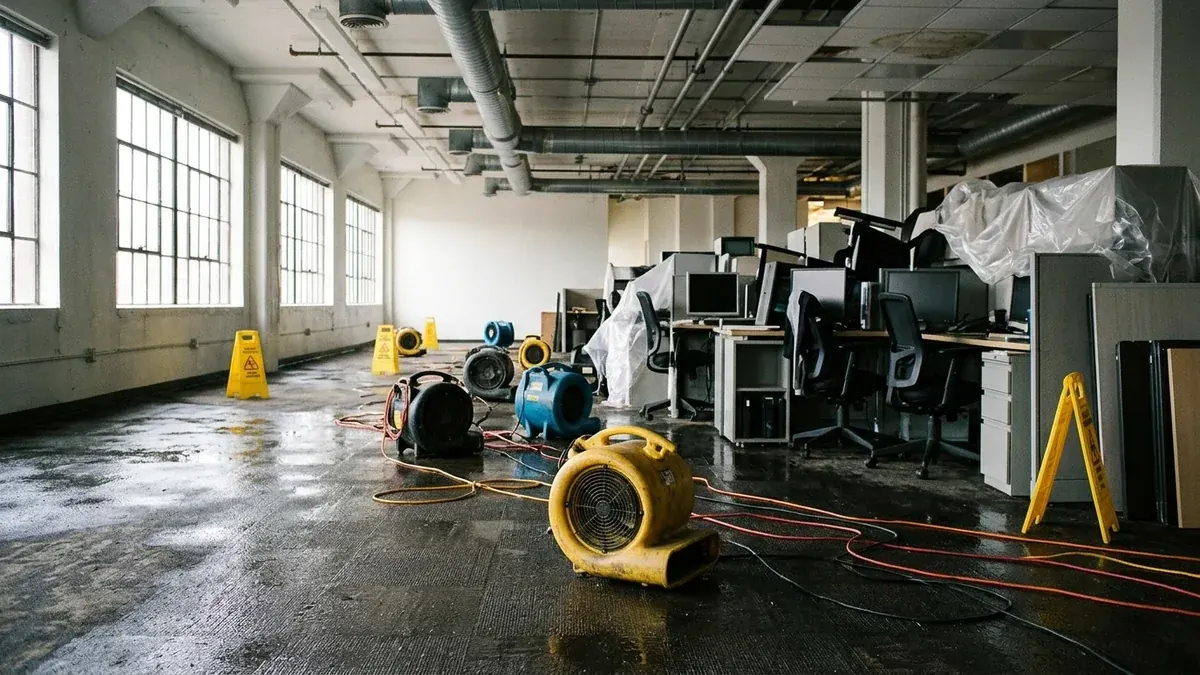
- Dry. Air movers and dehumidifiers dry the structure. Readings are logged each visit until they reach target levels. Drying commonly takes three to five days, longer in dense materials.
- Document. Photos, moisture logs and equipment records support your insurance claim.
Why Arizona homes need real drying equipment
Outdoor air in Arizona is dry, but a sealed home with air conditioning running is a different environment. Moisture trapped in drywall, framing and flooring dries slowly without controlled airflow and dehumidification. Mold can begin within 24 to 48 hours in damp materials, so waiting for the desert air to do the work is a gamble. Wet insulation and drywall give rodents nesting material. In dense cities the problem is constant, and NYC rodent control is a useful reference for property you own there.
Common causes of water that call for mitigation
Burst pipes, water heater failures, slab leaks, AC drain line overflows, washing machine hoses, roof leaks during monsoon storms and sewer backups. Each has its own risks. Read about burst pipe damage, sewage backups and flood water extraction.
For the full order of work from first call to final repairs, see the water damage restoration process. To learn how long drying takes, read how long water damage takes to dry.
Emergency water removal and urgent water extraction
When water is spreading, emergency water removal comes first. Urgent water extraction with pumps and wet vacuums takes standing water out of the building before it soaks into subfloors, cabinets and drywall. Every hour matters, so describe what is happening when you call and say if water is still running. See emergency water damage cleanup.
Disaster restoration after storms and floods
Large storms, monsoon flooding and major plumbing failures can turn into disaster restoration jobs, where many rooms or whole buildings need drying and repair. Documentation and a clear scope of work become even more important on large losses.
The science behind drying a building
Drying is a physics problem. Water moves from wet materials into air as vapor, and equipment must carry that vapor out of the building. Air movers speed up evaporation at the surface. Dehumidifiers remove the vapor from the air so it can absorb more. Without both, water just stays in the structure or moves somewhere else.
Technicians track progress with moisture meters and, in many cases, psychrometric readings such as temperature and relative humidity inside and outside the building. They compare readings with a dry standard, which is a reading from an unaffected area of the same material. A job is finished when the wet materials match that standard, not when the room feels dry.
Water categories and classes in plain language
The IICRC S500 standard sorts water by source. Category 1 comes from a clean source such as a supply line. Category 2 carries some contamination, such as washing machine or dishwasher discharge. Category 3 is grossly contaminated, such as sewage or flood water. Water can move up a category as time passes, which is why clean water that sits for days can become a bigger problem.
The standard also sorts the rate of evaporation into classes, from a small area of low absorption materials to a large area with deep saturation in dense materials. Higher classes need more equipment and more time. You do not need to memorize these terms, but you can ask a company which category and class it believes you have and why. Read more in water damage categories and classes.
Moisture mapping and thermal imaging
Water travels. A ceiling stain may be only the lowest point of a wet joist bay. Technicians use a pin or pinless moisture meter to measure materials and a thermal camera to show temperature differences that hint at hidden moisture. A moisture map, drawn on a floor plan, records the starting point and each day of progress. It is also strong evidence for an insurance claim.
What gets removed and why
Not every wet material is saved. Carpet pad and wet insulation hold water and usually go. Drywall that is clean water wet and firm may dry in place, while sagging or contaminated drywall comes out. Baseboards may be removed so air can reach the wall cavity. Cabinets may need toe kick removal to dry underneath. Removal looks like extra damage, but it shortens drying and lowers the chance of mold.
Mitigation records insurers look for
- Date and time of loss and when you reported it.
- Photos of the source and each affected room before work.
- Moisture readings by date, with a dry standard.
- Equipment placement and the days it ran.
- Lists of materials removed and why.
- Invoices that match the scope of work.
Mitigation costs and who pays
Mitigation is often covered when the loss is sudden and accidental, such as a burst supply line, and often excluded when water comes from outside flooding or from long term leaks. Policies differ, so read yours and ask your insurer in writing. Mitigation costs depend on the size of the affected area, how many days equipment runs, the water category and how much material must be removed. See water damage restoration cost in Arizona.
Common mitigation mistakes
- Waiting to see if it dries by itself.
- Running only fans without dehumidification in a closed house.
- Using household heaters to dry walls, which can warp materials and drive moisture deeper.
- Removing too little wet material to save on repairs, which leads to mold.
- Stopping equipment early because the surface feels dry.
When to call
Call as soon as water is found, even if the leak seems small. Describe the source, the rooms involved and whether the water is clean. If it is sewage or flood water, say so and avoid contact. For the full sequence from first call to repairs, see the restoration process.
Water mitigation help near me
Searching for water mitigation help near me usually means you want someone close and available. Call the number on this page and give your city, ZIP code and nearest cross streets, so the right local crew can be lined up for your address. We cover 138 Arizona cities. Choose yours:
Latest guides
Frequently asked questions
What is water mitigation?
It is the emergency response that stops water from causing more damage: stopping the source, extracting water, removing unsalvageable materials and drying the structure.
What is the difference between water mitigation and restoration?
Mitigation limits and stops damage right away. Restoration repairs and rebuilds the damaged parts afterward.
How soon should mitigation start?
As soon as possible. Mold can start in 24 to 48 hours, and water keeps moving into walls and floors until it is removed.
Does insurance pay for water mitigation?
Many policies cover mitigation after a sudden covered event such as a burst pipe. Keep photos, moisture logs and receipts, and ask your insurer what it requires.
How long does water damage mitigation take?
Extraction can take hours. Drying usually takes three to five days, and sometimes longer depending on materials and the amount of water.
Sources and standards
This page is general information, written and reviewed by the Restoration Services Arizona editorial team and updated in November 2026 for 2027. It is not legal, insurance or engineering advice. Useful references:
- EPA: A Brief Guide to Mold, Moisture and Your Home
- Arizona Registrar of Contractors: license lookup
- IICRC: standards for restoration
- FloodSmart.gov: flood insurance basics
- Arizona Department of Insurance and Financial Institutions
Water is spreading right now? Do not wait.
Every hour of standing water pushes moisture further into the structure. Call now and get connected.