Attic, Closet and Basement Mold Removal in Arizona
Mold hides where air is still and moisture collects. Attics, closets, wall cavities and basements are the usual places in Arizona homes.
Call now. We answer.
Tell the operator what happened and whether water is still running. Help is one call away.
(623) 310-1555Phone line open 24 hours a day, every day
- Give your city and nearest cross streets
- Say what happened and if water is still running
- Ask the company about its license and insurance
Quick answer
Attic, closet and basement mold usually comes from a roof or plumbing leak, poor ventilation, condensation from air conditioning or a damp slab. Removal means fixing the moisture source, containing the area, removing contaminated materials and drying everything before repair.
Attic mold
Attics in Arizona see extreme heat, but roof leaks, bathroom fans venting into the attic and poorly insulated ducts that sweat can wet the roof deck and insulation. Look for dark staining on sheathing, damp insulation and a musty smell. Roof leaks after monsoon storms are a common trigger.
Closet and wall mold
Closets on exterior walls, near AC units or against bathrooms can stay damp. A hidden leak behind a wall can feed mold for months before a stain shows. Moisture meters and thermal cameras help find it without tearing everything open. Damp insulation and warm attic corners attract rodents and insects as well as mold. For a second property in the Midwest, this guide to Omaha pest control explains how to keep animals out of attics and wall cavities.
Basement mold
Basements are uncommon in the Phoenix and Tucson areas, but they exist in parts of northern Arizona and in some older and custom homes. Water seepage, high groundwater, poor drainage and plumbing leaks cause most basement mold. Dehumidification and drainage fixes are part of lasting results.
How safe removal works
- Stop the moisture. Repair the leak or condensation problem.
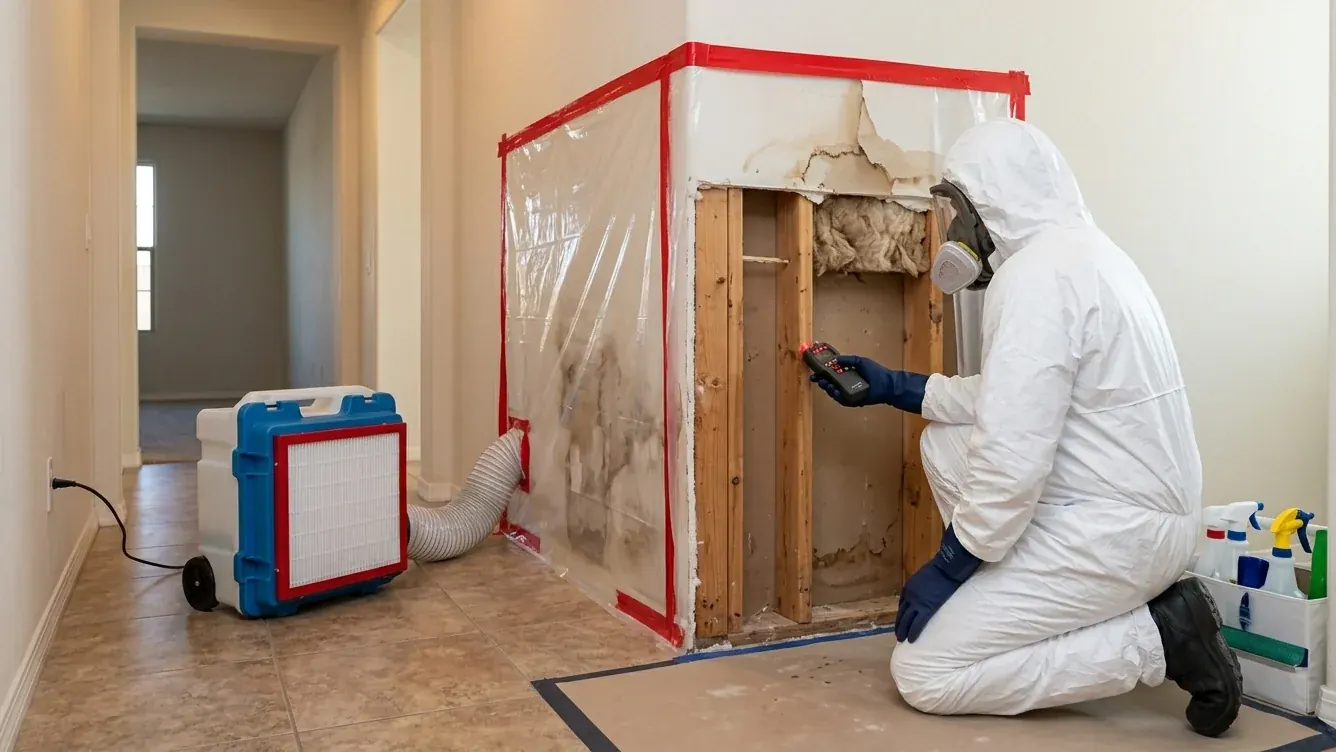
- Set containment with plastic barriers and air filtration.
- Remove materials that cannot be cleaned, such as damp drywall or insulation.
- HEPA vacuum and clean remaining surfaces.
- Dry the structure and confirm moisture levels.
- Repair, repaint and restore.
What not to do
- Do not scrub or dry sweep moldy areas. It spreads spores.
- Do not paint over mold. It returns.
- Do not mix bleach with other cleaners.
- Do not enter heavily affected attics without protective gear.
Read mold testing and inspection, mold remediation and the water damage prevention checklist.
Black mold removal
People search for black mold removal because dark growth looks alarming, but color alone does not tell you the species or the risk. Treat any extensive dark growth as a moisture problem that needs professional assessment, containment and removal. Do not disturb it yourself.
Mold containment and basement moisture control
Mold containment uses sealed plastic barriers, negative air machines and HEPA filtration to keep spores from reaching the rest of the home. Lasting results also depend on basement and crawl space moisture control: dehumidification, drainage fixes and sealed plumbing leaks.
Closet mold and flooded basement cleanup
Closet mold usually returns until the wall moisture or condensation source is fixed. For a flooded basement cleanup, water is pumped out, wet materials are removed, and the space is dried and sanitized before any rebuilding.
How mold removal is actually done
Professional mold remediation follows a sequence, and skipping a step is how mold comes back. The ANSI/IICRC S520 standard describes the framework: assess the building and find the moisture source, plan containment, protect workers and occupants, remove contaminated materials, clean remaining surfaces, dry the structure and verify the result.
- Source control. Repair the roof, pipe, vent or condensation problem first. Cleaning mold while water still feeds it is wasted effort.
- Containment. Plastic barriers seal the work area. Negative air machines with HEPA filters keep air moving into the work zone and not out of it.
- Protection. Technicians wear respirators, gloves and disposable suits. Occupants stay out of the zone.
- Removal. Moldy drywall, insulation and other porous material are cut out, bagged and removed from the home in sealed bags.
- Cleaning. Wood framing and other structural surfaces are HEPA vacuumed and cleaned, and sometimes sanded or wire brushed to remove growth.
- Drying and verification. Moisture content is measured. Some projects include post remediation sampling.
Attic mold in detail
Arizona attics get very hot, so people assume mold cannot survive there. It can grow in cooler morning hours and wherever moisture lingers. Typical causes are roof leaks around vents and flashing, bathroom fans that dump humid air into the attic instead of outside, ductwork that sweats, evaporative cooler leaks and poor ventilation. Signs include dark staining on the underside of the roof deck, nails with frost or rust marks, wet or matted insulation and a musty smell in upstairs rooms. Because attics are tight and hot, they are risky to enter without training and protective gear.
Closet and wall mold in detail
Closets stay still and dark. If one sits against an exterior wall, a bathroom, a water heater or an air handler, moisture can build up. Items stored on the floor and clothes packed tightly block airflow. A slow plumbing leak or a condensate line inside the wall can feed mold for months before stains show. Fixing the source and drying the wall are necessary, then affected drywall is removed and replaced. Wiping a closet wall with cleaner is only a temporary fix if moisture remains behind it.
Black mold removal: what to know
Black or dark green growth is often called black mold. Color alone does not identify a species, and many molds are dark. Species names such as Stachybotrys are discussed online, but the practical approach is the same for any extensive growth: assume it needs professional removal and protect your breathing. Health effects vary from person to person, and people with asthma, allergies or weakened immune systems are more sensitive. If someone in your home is unwell, speak with a doctor.
Basements, crawl spaces and flooded basements
Basements are rare in Phoenix and Tucson but common in some northern Arizona homes, older houses and custom builds. Flooded basement cleanup begins with safety: turn off power if water is near outlets, avoid wading in water that may be energized and do not use household vacuums on water. Water is pumped out gradually so walls are not stressed. Wet drywall, carpet and insulation are removed, surfaces are cleaned and the space is dried with dehumidifiers. Long term fixes include grading, gutters, sump pumps and vapor barriers. Basement moisture control, meaning keeping humidity low and water out, prevents repeat problems.
Small mold versus large mold
The EPA says a small area of mold, about ten square feet or less, can often be cleaned by a homeowner who takes precautions. Larger areas, mold from sewage or contaminated water, mold in HVAC systems and any situation where you are unsure should be handled by professionals. If you try small cleanup, wear an N95 respirator, gloves and eye protection, keep the area ventilated, scrub with detergent and water and dry completely. Throw away porous items that are moldy.
Prevention checklist
- Keep indoor humidity between about 30 and 50 percent.
- Run bathroom fans during and after showers and vent them outdoors.
- Clean AC condensate lines and pans before summer.
- Check roofs and flashing after monsoon storms.
- Leave space between stored items and walls in closets.
- Fix leaks quickly and dry wet items within 24 to 48 hours.
Next steps: mold testing and inspection, mold testing and removal in Arizona and mold remediation services.
Attic, closet and wall mold help near me
Searching for attic, closet and wall mold help near me usually means you want someone close and available. Call the number on this page and give your city, ZIP code and nearest cross streets, so the right local crew can be lined up for your address. We cover 138 Arizona cities. Choose yours:
Also see Bathroom Mold Removal and Moisture Fixes.
Frequently asked questions
Can I remove attic mold myself?
Small surface patches on non porous material may be cleanable, but attics are hot, tight and full of insulation. Larger areas call for trained crews with containment and respiratory protection.
Why is there mold in my closet?
Closets trap still air. A leak, an exterior wall, a nearby AC line or a bathroom wall can add moisture. Find the source first.
Does bleach kill mold?
Bleach can whiten surface stains but does not fix the moisture problem or reach into porous materials. Removal and drying matter more.
How long does mold removal take?
Small areas take a day or two. Larger jobs with drywall and drying can take a week or more.
Sources and standards
This page is general information, written and reviewed by the Restoration Services Arizona editorial team and updated in November 2026 for 2027. It is not legal, insurance or engineering advice. Useful references:
- EPA: A Brief Guide to Mold, Moisture and Your Home
- Arizona Registrar of Contractors: license lookup
- IICRC: standards for restoration
- FloodSmart.gov: flood insurance basics
- Arizona Department of Insurance and Financial Institutions
Water is spreading right now? Do not wait.
Every hour of standing water pushes moisture further into the structure. Call now and get connected.