Mold Testing and Mold Inspection in Arizona
You see a stain, smell something musty or just had a leak. Here is how mold inspection and testing work, when they help, and what to do with the results.
Call now. We answer.
Tell the operator what happened and whether water is still running. Help is one call away.
(623) 310-1555Phone line open 24 hours a day, every day
- Give your city and nearest cross streets
- Say what happened and if water is still running
- Ask the company about its license and insurance
Quick answer
A mold inspection is a visual and moisture check by a trained person to find mold and the water source behind it. Mold testing samples air or surfaces to identify spore levels or types. Testing does not remove mold, so the real fix is finding and stopping the moisture, then removing contaminated material safely.
Mold inspection vs mold testing
- Inspection. Looks for visible growth, damp materials, hidden moisture and the cause. Tools include moisture meters and thermal cameras.
- Air sampling. Collects indoor air and compares it with outdoor air to see whether spores are elevated.
- Surface sampling. Swabs or tape lifts identify what is growing on a visible spot.
When testing makes sense
Testing can help when you smell mold but cannot find it, after a leak when you want documentation, for a real estate transaction, or when someone has symptoms and a clear record is needed. If mold is already visible, the first step is usually to fix the moisture and plan removal, because testing a visible patch rarely changes what you do.
Why mold grows in Arizona homes
Dry outdoor air does not protect a house from leaks. Slab leaks, AC condensate lines, plumbing behind walls, roof leaks during monsoon storms and poor ventilation in bathrooms and closets create damp pockets. Mold can start within 24 to 48 hours in wet materials. An inspector who checks for moisture will often notice pest activity too. For property in Pennsylvania, Pittsburgh PA pest control is a local reference.
What happens after a positive result
- Find and fix the water source.
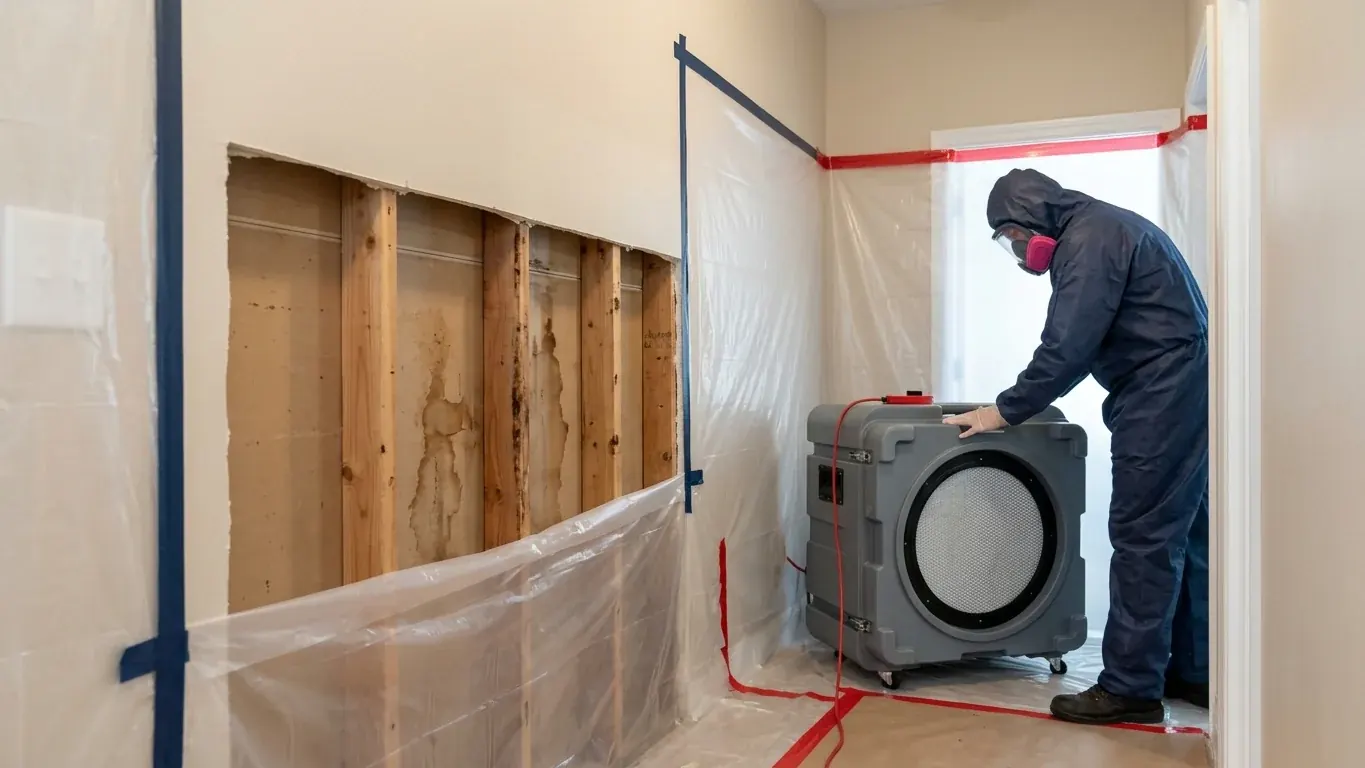
- Contain the area so spores do not spread.
- Remove contaminated porous materials such as drywall and insulation.
- Clean surfaces with HEPA vacuuming and approved cleaning.
- Dry the structure and confirm moisture levels before repair.
Keep testing and remediation separate
For an unbiased result, many people use one company to test and a different company to remove mold. Ask any provider how it handles this. Read more in mold testing and removal in Arizona and how fast mold grows.
See also attic, closet and wall mold removal.
Hidden mold in wall cavities
Hidden wall cavity mold can grow behind drywall, under cabinets or above ceilings after a slow leak. Signs include a musty smell with no visible source, peeling paint and unexplained health symptoms. Moisture mapping and thermal imaging help locate the wet spot, and small inspection openings may be needed to confirm what is inside.
Finding certified mold remediation help
People often search for certified mold remediation. In practice, ask whether technicians hold training from groups such as the IICRC, whether the company follows ANSI/IICRC S520, and verify the company license at roc.az.gov. Credentials help you compare companies, but written scope and containment matter just as much.
What the science says about indoor mold
Mold spores are always present in indoor and outdoor air. The problem begins when moisture lets them grow into colonies on building materials. The U.S. Environmental Protection Agency advises that the key to mold control is moisture control, and that if mold is present you should clean it up and fix the water problem. Testing alone does not solve either part.
Types of mold tests
- Spore trap air samples. A pump pulls a measured volume of air across a sticky slide. A lab counts spores and identifies groups. Indoor results are usually compared with an outdoor sample taken at the same time.
- Surface samples. Tape lifts or swabs identify what is growing on a visible stain, which can confirm whether a spot is mold or just dirt.
- Bulk samples. A small piece of material, such as drywall, goes to the lab.
- Moisture assessment. Not a lab test, but often the most useful part. Meters and thermal cameras locate hidden wet materials.
Limits of mold testing
There are no universal federal limits for acceptable spore counts in homes. Results vary with the day, the weather, door and window use and how long the sample ran. A single air test is a snapshot, not a verdict. A good inspector explains what the results mean in context and does not scare you with raw numbers.
Why Arizona homes get mold
Arizona is dry, but houses are tightly sealed and cooled with air conditioning, which creates cool surfaces where humid air condenses. Common sources include AC condensate lines and drain pans, slab leaks, plumbing in walls, roof leaks after monsoon storms, window and stucco leaks, evaporative coolers and bathroom vents that exhaust into attics. Mold can begin within 24 to 48 hours in wet, organic materials such as drywall paper and wood. See how fast mold grows.
Hidden wall cavity mold
Hidden wall cavity mold forms behind drywall, under cabinets, inside ceilings and in insulation. Clues include a musty smell with no visible source, paint bubbling, warped baseboards, a recent leak or a spike in your water bill. An inspector uses moisture readings and a thermal camera to find suspect areas, and may drill a small inspection hole or use a borescope camera to check inside a wall.
Certified mold remediation: what the term means
Several organizations train and certify technicians, including the IICRC, which publishes the ANSI/IICRC S520 standard for professional mold remediation. A certificate shows training, but it does not replace verifying the company's Arizona license on roc.az.gov and confirming insurance. Ask what standard the company follows, who will be on site and how containment will be built.
Why testing and removal are often separated
Some homeowners hire one company to assess and write a plan and another to do the work. This avoids a conflict of interest. If one company does both, ask for the data and written protocol so you can understand why it recommends what it does.
After remediation
A job is not finished when the mold is gone. The water source must be repaired, the structure must be dry and the area should be checked visually, and sometimes with post remediation sampling, before it is rebuilt. Ask how the company will verify success, and keep the records in case of a future sale or claim.
What to do today
- Stop the moisture source if you can find it.
- Do not disturb or dry sweep visible growth.
- Photograph the area and write down when you first noticed it.
- Reduce humidity with air conditioning and dehumidifiers, and keep it under about 50 percent.
- Call for an assessment and ask for a written plan.
Also see attic, closet and basement mold, mold remediation and the EPA's guide to mold, moisture and your home.
Mold testing and inspection help near me
Searching for mold testing and inspection help near me usually means you want someone close and available. Call the number on this page and give your city, ZIP code and nearest cross streets, so the right local crew can be lined up for your address. We cover 138 Arizona cities. Choose yours:
Also see Bathroom Mold Removal and Moisture Fixes.
Frequently asked questions
Do I need mold testing if I can see mold?
Often not. Visible mold means you already know there is a moisture problem. The priority is fixing the source and safe removal.
How much does mold testing cost in Arizona?
Price varies with the number of samples, lab fees and home size. Ask for a written quote that lists samples and lab work.
Can I test for mold myself?
Store kits can show that spores exist, which they always do, but they do not tell you how much is too much or where it comes from. A trained inspector gives better information.
What does a mold inspection include?
A visual walkthrough, moisture readings, thermal imaging in some cases, and notes on the likely water source.
Sources and standards
This page is general information, written and reviewed by the Restoration Services Arizona editorial team and updated in November 2026 for 2027. It is not legal, insurance or engineering advice. Useful references:
- EPA: A Brief Guide to Mold, Moisture and Your Home
- Arizona Registrar of Contractors: license lookup
- IICRC: standards for restoration
- FloodSmart.gov: flood insurance basics
- Arizona Department of Insurance and Financial Institutions
Water is spreading right now? Do not wait.
Every hour of standing water pushes moisture further into the structure. Call now and get connected.