Water Damaged Drywall and Ceiling Repair in Arizona
A brown stain, a bubble in the paint or a sagging ceiling is a warning. Here is what to do before the drywall fails.
Call now. We answer.
Tell the operator what happened and whether water is still running. Help is one call away.
(623) 310-1555Phone line open 24 hours a day, every day
- Give your city and nearest cross streets
- Say what happened and if water is still running
- Ask the company about its license and insurance
Quick answer
Water damaged drywall can sometimes be dried in place if it is treated quickly with clean water. Sagging, crumbling, moldy or contaminated drywall should be cut out and replaced. A ceiling that bulges can hold a large amount of water and may collapse, so keep clear and call a professional.
Signs of water damage in ceilings and walls
- Brown or yellow stains that grow
- Bubbling, peeling or cracking paint
- Sagging, soft or bulging drywall
- Musty smell or visible mold
- Dripping water or wet insulation behind the surface
If your ceiling is bulging
Water can pool above the drywall. Stay out from under it, move belongings away and, if it is safe, puncture the lowest point with a small hole over a bucket to let water drain in a controlled way. Turn off power to the area. Then call for help. See ceiling and roof leak damage.
Dry or replace?
Clean water that has been wet for less than a day or two may let drywall dry in place with air movers and dehumidifiers. Replace drywall that is sagging, crumbling, stained by sewage or other contaminated water, or showing mold. Insulation behind wet walls usually needs removal. Open wall cavities during repairs are a chance to find and seal rodent entry points. For New York City buildings, this NYC rat and mouse control guide explains exclusion work.
Repair steps
- Stop the source: roof, pipe, AC line or appliance.
- Cut out wet or damaged drywall and insulation.
- Dry the framing and confirm moisture readings.
- Hang new drywall, tape and finish.
- Prime, texture to match and paint.
Why a stain is not the whole story
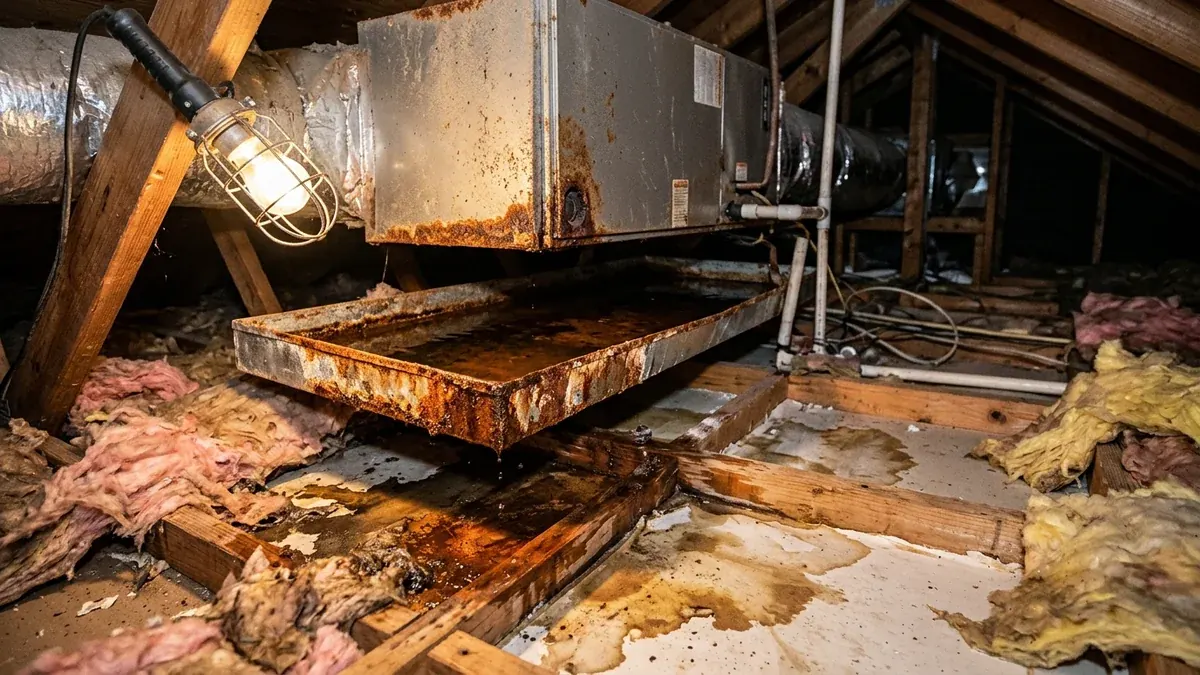
The visible spot is often only the exit point. Water travels along joists and pipes, so the source can be several feet away. A moisture meter and thermal camera find wet areas without guessing. Learn the common sources in AC drain line overflow and slab leak signs.
See also water mitigation and mold inspection.
Drywall water damage repair: cut, dry, replace
Drywall water damage repair usually follows the same pattern: cut out the wet section, dry the framing, replace the board and finish it to match. Cutting a clean line a few inches beyond the wet area helps confirm that no hidden moisture remains.
Why drywall fails when wet
Drywall is gypsum between sheets of paper. Gypsum softens when saturated and the paper feeds mold when it stays damp. Joint compound and tape loosen and paint blisters. The longer drywall stays wet, the weaker and more contaminated it becomes. Clean water caught within a day or two gives the best chance of drying drywall in place.
Drywall water damage repair step by step
- Stop the leak. Repair the roof, pipe, fixture or condensate line before repairing the board.
- Protect the area. Move furniture, cover floors and turn off power if wiring is wet.
- Measure moisture. A moisture meter shows how far water spread beyond the stain.
- Cut out damaged board. Mark a straight cut past the wet area. Removing insulation behind it lets framing dry.
- Dry. Air movers and dehumidifiers dry the wall cavity until moisture readings are normal.
- Clean and treat. Framing is cleaned, and mold is addressed if present.
- Install new board. Cut to fit, screw to framing and tape the joints.
- Finish. Apply joint compound in thin coats, sand, prime, texture to match and paint.
Ceiling water damage repair
Ceilings are harder because water collects above them. A small brown ring may sit on top of a large wet area. Insulation above holds water like a sponge and adds weight. Ceilings that sag or bulge are at risk of falling. If you see this, keep people away, protect the floor and consider releasing the water in a controlled way through a small hole into a bucket, if you can do it safely. Shut off power to ceiling lights if they are wet. Then find the source: a roof leak, an air handler pan, a bathroom above, a water supply line or the AC drain. See ceiling and roof leak damage.
Textured ceilings and older homes
Many Arizona homes have knockdown or popcorn textures. Popcorn ceilings installed before the mid 1980s may contain asbestos, so have a material tested before scraping or cutting. Do not disturb it yourself if the home is old. Matching textures after repair is a skill, and results vary with the method used.
When replacement is the safer choice
- The water was sewage, flood water or any other contaminated source.
- Drywall is soft, crumbling or sagging.
- Mold is visible or the smell is strong.
- Water sat for several days.
- Insulation behind the wall is wet and heavy.
How long does it take?
Drying takes about three to five days for most clean water jobs. Replacement, taping, drying of compound, priming and painting add several days more. Large ceilings, textures and multiple rooms take longer. Ask for the schedule in writing.
Cost factors
Price depends on the area, whether the work is on a wall or ceiling, access, insulation removal, mold, texture matching and painting. A repair that stays within a small section costs far less than a whole room. Compare written scopes, not only totals. More detail is in water damage restoration cost in Arizona.
Next steps
Call if water is still present, the ceiling is bulging, or you are unsure how far moisture spread. For prevention, read the water damage prevention checklist. For drying equipment, see water mitigation.
Drywall and ceiling repair help near me
Searching for drywall and ceiling repair help near me usually means you want someone close and available. Call the number on this page and give your city, ZIP code and nearest cross streets, so the right local crew can be lined up for your address. We cover 138 Arizona cities. Choose yours:
Frequently asked questions
Can water damaged drywall be saved?
Sometimes. Clean water caught early can dry in place. Sagging, moldy or contaminated drywall should be replaced.
How much does ceiling water damage repair cost?
It depends on the area, access, whether insulation is wet and how much finishing is needed. Get a written scope from the company.
Will a water stain on the ceiling go away?
The stain will not fade without sealing and repainting, and the leak behind it will continue until it is fixed.
Is a bulging ceiling an emergency?
Yes. Trapped water can bring the ceiling down. Keep people away and call for help.
Sources and standards
This page is general information, written and reviewed by the Restoration Services Arizona editorial team and updated in November 2026 for 2027. It is not legal, insurance or engineering advice. Useful references:
- EPA: A Brief Guide to Mold, Moisture and Your Home
- Arizona Registrar of Contractors: license lookup
- IICRC: standards for restoration
- FloodSmart.gov: flood insurance basics
- Arizona Department of Insurance and Financial Institutions
Water is spreading right now? Do not wait.
Every hour of standing water pushes moisture further into the structure. Call now and get connected.