Quick answer
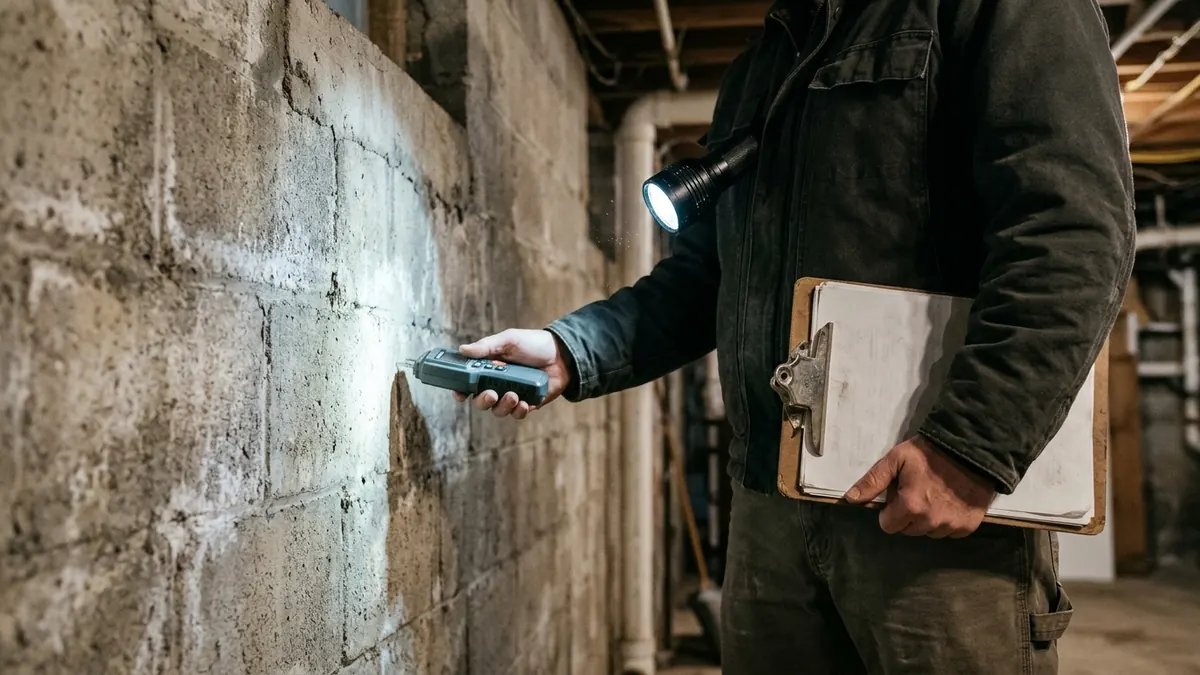
A professional inspection finds the source, measures how far moisture has spread and decides what can be dried and what must be removed. Expect questions, photos, meter readings, a thermal camera scan and a written scope with a drying plan.
Before the visit
The crew will ask when the water started, where it came from, what has been shut off and whether anyone saw it first. Give honest dates. If you have photos, share them. If you are not sure of the source, say so. They will usually ask about your insurer and whether you have filed a claim.
Step 1: Safety check
The inspector looks for electrical hazards, structural issues and contamination. If the water is category 2 or 3, protective equipment and containment come first. If power is a risk, the area is cut off before anyone works inside.
Step 2: Find and confirm the source
Water has to be stopped first. The inspector checks plumbing, appliances, the roof and the air conditioner. They may use a pressure test or acoustic tools for pipe leaks, and a plumber or roofer may be needed to repair the cause. Read about leak detection and moisture mapping.
Step 3: Measure moisture
- Moisture meters read water content in drywall, wood and subfloor.
- Thermal cameras show cool, wet areas behind walls and under floors.
- Hygrometers measure temperature and humidity in the air.
- Moisture maps mark wet areas on a sketch so progress can be tracked.
Step 4: Identify the water type and class
Water is categorized from 1 to 3, clean to heavily contaminated, and the damage is classed from 1 to 4 by how much material absorbed water. Both affect the plan. See our guide on categories and classes.
Step 5: Photos and documentation
Good crews photograph every affected room, readings and equipment placement, and keep a drying log. These records support your insurance claim and show that drying finished.
Step 6: The scope and plan
You should receive a clear written scope that lists rooms and materials, which items will be dried and which removed, equipment to be used, expected drying days and what repairs may follow. Ask for the scope in writing and ask how changes will be handled.
Step 7: Drying and monitoring
Air movers and dehumidifiers go in, and readings are taken daily. The inspector or technician adjusts equipment as areas dry, and drying ends only when readings match dry standards. Our structural drying page explains this.
Questions worth asking
- What is the likely source, and who will fix it?
- How far did the moisture spread?
- What can be saved and what has to go?
- How long will drying take?
- What is the license number, and may I verify it?
- Will I get a drying log and photos?
You can check a license at roc.az.gov, and our license guide shows how.
Red flags
Be careful if a company will not put anything in writing, pushes you to sign right away, will not show a license or says you do not need to document anything. A good inspection is calm, explained and transparent.
More guides to read next
- How to Hire a Water Damage Company
- Leak Detection and Moisture Mapping
- Restoration Process Step by Step
- Signs of Hidden Water Damage
Get help in your city
Pick your city for local conditions, ZIP codes and the 24/7 line at (623) 310-1555.
How this changes across Arizona
Low desert
Valley homes face a long hot season with air conditioners running hard, and a short but intense monsoon from July to September. Both create water losses, so it helps to know where your main shutoff is before anything fails.
High country
Cold months change the job in northern Arizona: frozen ground and cold interiors slow drying, and a building without heat can freeze again. Keep the heat on at a safe minimum if you leave a cabin.
Colorado River
River communities see occasional storms that flood washes and low areas. Heat dries water fast on the surface but moisture can stay trapped under flooring and behind walls.
Keep these records
- The date and time you first noticed the problem, and what you did.
- Photos and video of the damage before and after any cleanup.
- The name, license number and insurance proof of every company.
- Moisture readings and drying logs, if the company provides them.
- A written scope and every invoice, receipt and message.
- Your insurance claim number and the adjuster's contact details.
When to call
If water is spreading, a pipe has burst, or you are unsure how far the damage goes, call (623) 310-1555 any hour for emergency contact and urgent services. For storms, check weather.gov and the storm, hail and flood alerts guide, and see the FEMA app guide to set up alerts. To find your ZIP code, use the ZIP code lookup. To compare prices, read the cost guide.
More quick answers
How fast should I call after water damage?
As soon as you can safely do so. Water moves into drywall, insulation and flooring within hours, and mold can start in a day or two in damp materials. Call (623) 310-1555 at any hour.
Does this help line charge me to call?
Calling to describe the damage and get connected does not obligate you to hire anyone. You decide whether to use the company you are connected with.
What should I photograph before cleanup starts?
Take wide and close photos of the water, the source, damaged belongings and any visible staining, with the date. Keep receipts. This record helps with insurance.
Do I need to be home when the crew arrives?
Someone with access to the property should be there to show the damage and sign the work authorization. Ask the company how it handles access and keys.
Can I use my own plumber first?
Yes. Stopping the leak is the first step, and a plumber can do that. A restoration company then dries and cleans what the water reached.
Frequently asked questions
How long does an inspection take?
Many take 30 to 90 minutes, depending on the size of the home and the damage.
What tools are used?
Moisture meters, thermal cameras, hygrometers and sometimes leak detection tools.
Will I get a written scope?
You should. Ask for rooms, materials, equipment and timing in writing.
Do I need an inspection even if it looks dry?
If there was a leak, yes. Moisture can stay hidden for weeks.
Who pays for the inspection?
Costs vary. Ask before the visit and check with your insurer.
Sources and further reading
- National Weather Service: Flood Safety
- Ready.gov: Floods
- FEMA: Emergency alerts and preparedness
- Arizona Registrar of Contractors: license lookup