Quick answer
In summer, most Arizona water damage comes from air conditioner condensate leaks, failing water heaters and supply lines, and monsoon roof leaks. Heat dries surfaces fast but hides moisture in walls, so inspect early and dry fully.
Why summer is different
Arizona summers push every system in the home. Air conditioners run all day, water heaters work harder in hot garages and attics, and monsoon storms deliver rain in sudden bursts. Heat also dries surfaces quickly, so a leak can disappear from view while moisture stays in insulation, drywall and the slab.
Air conditioner leaks
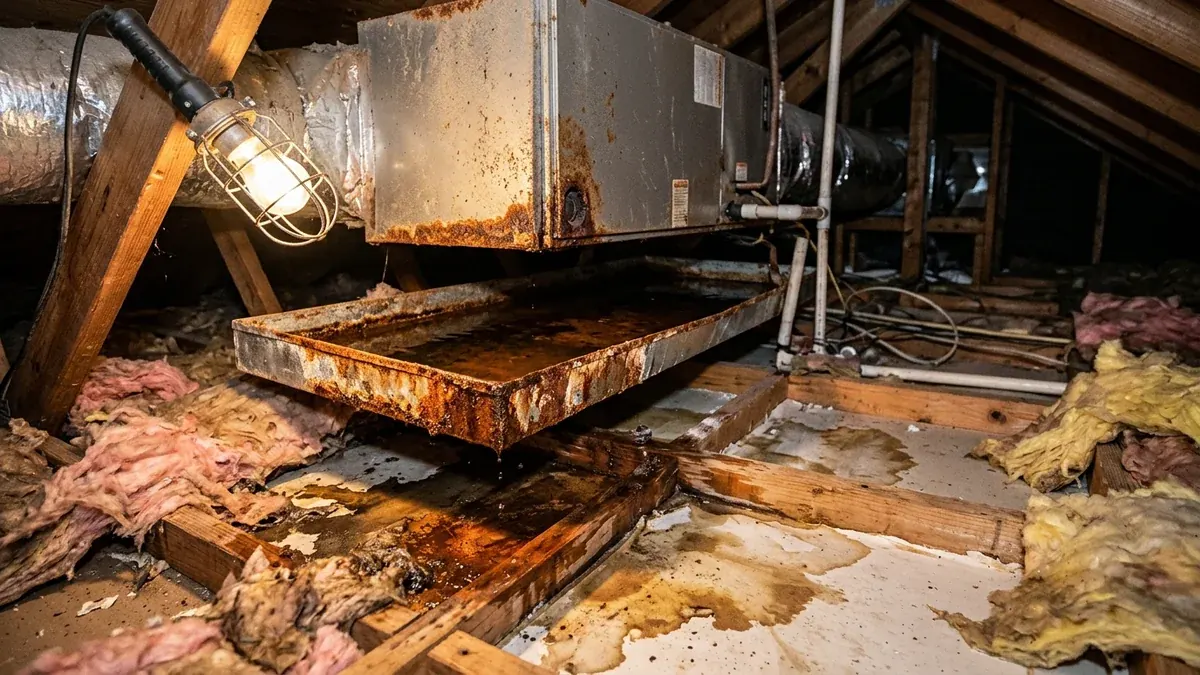
A cooling system removes many gallons of water from the air each day. The condensate drains away through a line that can clog with dust and algae. When it does, the pan overflows into the attic or closet and then into the ceiling below. Ask your HVAC company to flush the line each spring, install a secondary pan and add a float switch that shuts the unit down when the pan fills. Our guide to AC drain line overflow explains the details, and the air conditioner leak damage page covers cleanup.
Water heaters and supply lines
Hard water scales the inside of tanks, and garage and attic heat speeds wear. A tank that fails can release dozens of gallons. Check the base for moisture, test the pressure relief valve and replace tanks that are past ten years. Braided washing machine hoses and ice maker lines should be replaced every five years. See water heater leak cleanup.
Slab leaks
Hot spots on a floor, the sound of running water and rising bills can point to a leak under concrete. Summer use makes these easier to notice because the meter shows continuous flow. Read slab leak signs in Arizona.
Monsoon storms
From mid June, storms bring wind driven rain, dust, hail and flash floods. Roofs aged by the sun leak first at flashing, vents and tile. After every storm, check ceilings and the attic. For storm response, see storm and monsoon damage cleanup and flood damage cleanup.
Heat and drying
High temperatures help drying, but too fast drying can crack wood and trap moisture behind finishes. Professionals use meters and controlled airflow. Do not rely on a fan and the sun.
Summer checklist
- Flush AC condensate lines and test float switches.
- Inspect the roof, flashing and drains.
- Check water heater base and supply hoses.
- Watch the water meter for continuous flow.
- Install water sensors near appliances.
- Sign up for weather.gov and FEMA alerts.
If water damage happens
Turn off the water or power as safe, document the damage and call (623) 310-1555 any hour for emergency contact and urgent services. Start drying within a day to limit mold. Mold can begin in one to two days in damp materials, and our mold growth guide shows what to expect.
More guides to read next
- Arizona Water Damage Calendar
- AC Drain Line Overflow Guide
- Monsoon Flood and Storm Damage Guide
- Water Shutoff and Emergency Kit Guide
Get help in your city
Pick your city for local conditions, ZIP codes and the 24/7 line at (623) 310-1555.
How this changes across Arizona
Low desert
In the Sonoran Desert, dry air can hide moisture. A leak that never shows a puddle can still soak a wall, so stains, musty smells and a rising water bill are all worth checking.
High country
Northern and eastern Arizona homes see snow load, ice and freeze and thaw cycles. After a thaw, check attics, crawl spaces and the walls under roof valleys for hidden moisture.
Colorado River
Western Arizona summers are some of the hottest in the country. Air conditioner failures and condensate overflows are common causes of water damage, and empty properties benefit from a monthly check.
Keep these records
- The date and time you first noticed the problem, and what you did.
- Photos and video of the damage before and after any cleanup.
- The name, license number and insurance proof of every company.
- Moisture readings and drying logs, if the company provides them.
- A written scope and every invoice, receipt and message.
- Your insurance claim number and the adjuster's contact details.
When to call
If water is spreading, a pipe has burst, or you are unsure how far the damage goes, call (623) 310-1555 any hour for emergency contact and urgent services. For storms, check weather.gov and the storm, hail and flood alerts guide, and see the FEMA app guide to set up alerts. To find your ZIP code, use the ZIP code lookup. To compare prices, read the cost guide.
More quick answers
How fast should I call after water damage?
As soon as you can safely do so. Water moves into drywall, insulation and flooring within hours, and mold can start in a day or two in damp materials. Call (623) 310-1555 at any hour.
Does this help line charge me to call?
Calling to describe the damage and get connected does not obligate you to hire anyone. You decide whether to use the company you are connected with.
What should I photograph before cleanup starts?
Take wide and close photos of the water, the source, damaged belongings and any visible staining, with the date. Keep receipts. This record helps with insurance.
Do I need to be home when the crew arrives?
Someone with access to the property should be there to show the damage and sign the work authorization. Ask the company how it handles access and keys.
Can I use my own plumber first?
Yes. Stopping the leak is the first step, and a plumber can do that. A restoration company then dries and cleans what the water reached.
Frequently asked questions
Why do air conditioners leak so much in summer?
They run constantly and produce a lot of condensate that can clog drain lines.
Is summer heat enough to dry a wet home?
No. Moisture hides in walls and slabs, so equipment and meters are needed.
How often should I replace hoses?
About every five years for washing machine and ice maker hoses.
Should I check the attic?
Yes, monthly in summer for stains and damp insulation.
Who can help after a storm leak?
Call (623) 310-1555 for drying and cleanup, and a roofer for the repair.
Sources and further reading
- National Weather Service: Flood Safety
- Ready.gov: Floods
- FEMA: Emergency alerts and preparedness
- Arizona Registrar of Contractors: license lookup